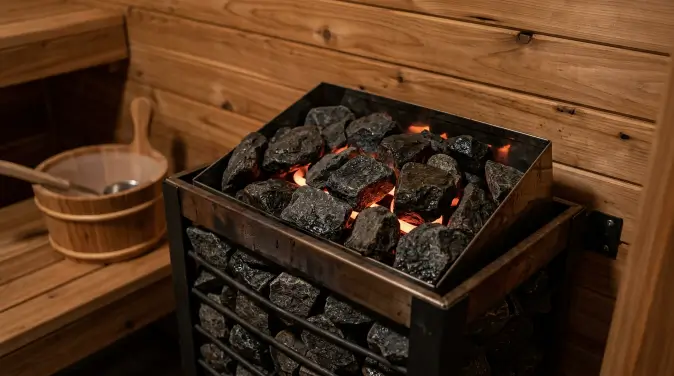
A sauna heater earns its keep most in winter, when the temperature contrast between a heated cabin and cold outdoor air is at its sharpest and daylight hours make an evening heat session more appealing than a summer one already spent outside. Well-insulated cabins lose only modest efficiency to cold ambient temperatures, typically adding 5 to 10 minutes to warm-up time rather than dramatically raising running cost. For many owners, winter is also when the habit of regular use actually sticks, since it fills a season with fewer other outdoor activities competing for the same evening hours.
Why Does the Hot-to-Cold Contrast Matter So Much?
Part of the appeal of a sauna is the sharp shift between the heated interior and the air outside once you step out. In summer, that contrast is mild since outdoor temperatures are already warm. In winter, walking from a 175°F cabin into 30°F air, or straight into snow, is a genuinely different sensory experience, and it’s the main reason cold-climate sauna cultures, particularly Finland, built the tradition around winter use in the first place. If contrast is part of why you wanted a sauna, winter delivers it in a way summer simply can’t.
Does Cold Weather Actually Hurt Heater Performance?
Not significantly, assuming the cabin itself is properly insulated. A cabin with a foil vapor barrier, sealed door, and solid cedar or hemlock paneling holds heat efficiently regardless of outdoor temperature; the heater simply starts from a colder baseline and needs a bit more time and energy to close that gap. Expect warm-up to take 5 to 10 minutes longer on a genuinely cold day compared to a mild one, and expect a modest bump in electric cost during the coldest months, but nothing close to doubling. A poorly insulated cabin, on the other hand, will struggle far more in winter, which is part of why insulation quality matters more than heater size alone.
Is It Safe to Run an Outdoor Cabin in Freezing Conditions?
Yes, for a cabin built and sealed correctly. Door seals and threshold gaskets matter more in winter, since any gap lets cold air in and heated air out continuously, forcing the heater to work harder than it should. Check the door seal each fall before the cold sets in, and clear snow buildup away from any vents or the heater’s air intake if it’s an outdoor unit. Pipes or plumbing near an outdoor cabin, if present for an attached shower or plunge, need standard freeze protection, but the heater and cabin itself handle sustained cold without special modification once properly sealed.
Does Winter Use Shorten a Heater’s Lifespan?
Not in any meaningful way. The heating element cycles on and off to maintain temperature the same way year-round; in winter it simply spends slightly more time at higher output to compensate for the colder starting point and ongoing heat loss through the walls. This is well within normal operating parameters for a residential unit and isn’t a source of extra wear compared to summer use. Stones still need periodic replacement on the same one- to two-year schedule regardless of season.
See also: The Peptide “Program” Math: What the Numbers in 2026 Actually Support
How Does Winter Compare to Other Seasons for Actual Use Frequency?
Many owners report using a sauna more consistently in winter than in any other season, simply because it fills an evening slot that summer already has covered with hikes, yard work, or time on a patio. Cold, dark evenings are exactly when a 20-minute heat session feels most worth doing, and that consistency matters more for the habit sticking than any single feature of the equipment itself. Spring and fall tend to fall somewhere in between, with usage picking back up as outdoor temperatures drop and settling into a steadier weekly pattern once winter fully arrives.
Why Do Winter Buyers Often Find Installation Easier?
Outdoor construction and landscaping projects tend to slow down in winter in most climates, which sometimes means electricians and installers have more open scheduling than during the busy spring and summer months. Buyers who want a heater installed in time for the coldest part of the season often start the process in fall, giving enough lead time for electrical work, cabin assembly, and any base preparation like a concrete pad or leveled gravel bed before the ground fully freezes.
What Winter-Specific Habits Help the Most?
Clear a safe, ice-free path to an outdoor cabin before the first hard freeze, since a slick walkway between a hot sauna and cold air is a real fall risk. Keep a robe or heavy towel just outside the door so the transition from heat to cold doesn’t mean standing in freezing air any longer than necessary. If snow accumulates on the roof or against the walls, brush it away from vents and any exterior electrical components rather than letting it build up over the season. None of this is complicated, but it’s the kind of small seasonal maintenance that keeps a winter sauna routine running smoothly rather than becoming a chore.
What Should You Check Before Winter Sets In?
Inspect the door seal, confirm the guard rail and clearances are intact, and check that stones haven’t degraded from the previous season’s use. If you’re buying new for the winter season, sizing still comes first: a heater matched to your cabin’s cubic footage handles cold-weather warm-up far better than an undersized one straining to keep up. sweatdecks.com/collections/sauna-heaters carries a range of kW sizes if you’re comparing options before the cold weather makes outdoor installation less convenient.
Frequently Asked Questions
Does cold weather make a sauna heater less efficient? A well-insulated cabin loses relatively little efficiency in winter. The heater works somewhat harder to overcome a colder starting point, but the difference in monthly running cost is usually modest.
Is it safe to use an outdoor sauna in freezing temperatures? Yes, as long as the cabin is properly insulated and the door seals well. The contrast between the heated interior and freezing air outside is part of the appeal for many winter users.
Does winter use wear out a sauna heater faster? Not meaningfully. The heating element cycles the same way regardless of season; it simply runs a bit longer per session to overcome colder ambient starting temperatures.
How long does it take a sauna to warm up on a cold day? Expect warm-up time to run 5 to 10 minutes longer than in summer for the same heater and target temperature, depending on how cold the outdoor air and the cabin’s starting interior temperature are.
Is winter a good time to buy and install a sauna heater? Many buyers find winter a practical time to install, since it’s when they most want to use the sauna, and electricians and installers can sometimes have more open scheduling than during peak outdoor construction season.
References
- Hussain, J. N., et al. “Cardiovascular and Other Health Benefits of Sauna Bathing: A Review of the Evidence.” Mayo Clinic Proceedings, 2018. https://pubmed.ncbi.nlm.nih.gov/30077204/
- Kunutsor, S. K., et al. “Clinical Effects of Regular Dry Sauna Bathing: A Systematic Review.” Evidence-Based Complementary and Alternative Medicine, 2018. https://pubmed.ncbi.nlm.nih.gov/29849692/
- Hannuksela, M. L., Ellahham, S. “Effects of Heat and Cold on Health, With Special Reference to Finnish Sauna Bathing.” American Journal of Physiology – Regulatory, Integrative and Comparative Physiology, 2018. https://pubmed.ncbi.nlm.nih.gov/29351426/
By Renata Voss